
Today I’ll compare the SSK vs K2TOG knitting decreases and explain the differences between the two. Since you’ll find them paired together in many knitting patterns, it only makes sense to tell you why.
Individually, each knitting decrease creates its own effect, but when combined and used in different orders they can create different looks. I’ll explain what these pairings are and provide some visual examples for clarity.
Let’s begin with a quick refresher.
Table of Contents
Is the K2TOG the same as the SSK?
No, the K2TOG is not the same as the SSK. You can learn more about the K2TOG decrease here.
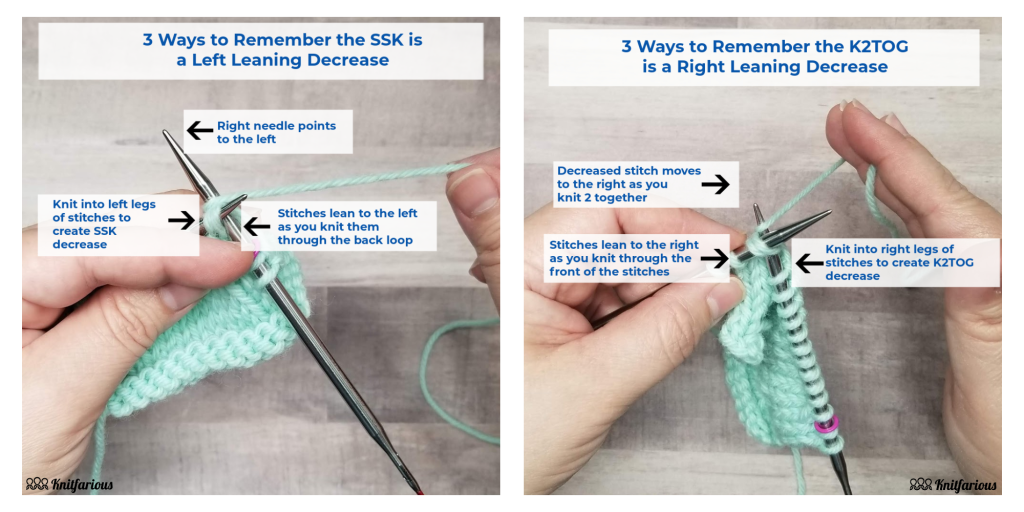
The knit two together is a right leaning decrease. To make the SSK you insert your right needle tip into the next two stitches and knitting them together at the same time. This the easiest knitting decrease to make and it always produces the neatest decreases out of all the different types.
Is the SSK the same as knit 2 together (K2TOG)?
No, the slip,slip, knit is not the same as the K2TOG. You can learn all about the SSK knitting decrease here.
The SSK is a left-leaning decrease, also referred to as a left slanting decrease. It requires you to slip the first and second stitch knitwise, one by one, before knitting them both through the back loop.
Compared to the K2TOG, the SSK requires more care to prevent it from being oversized.
Using Right and Left Leaning Decreases
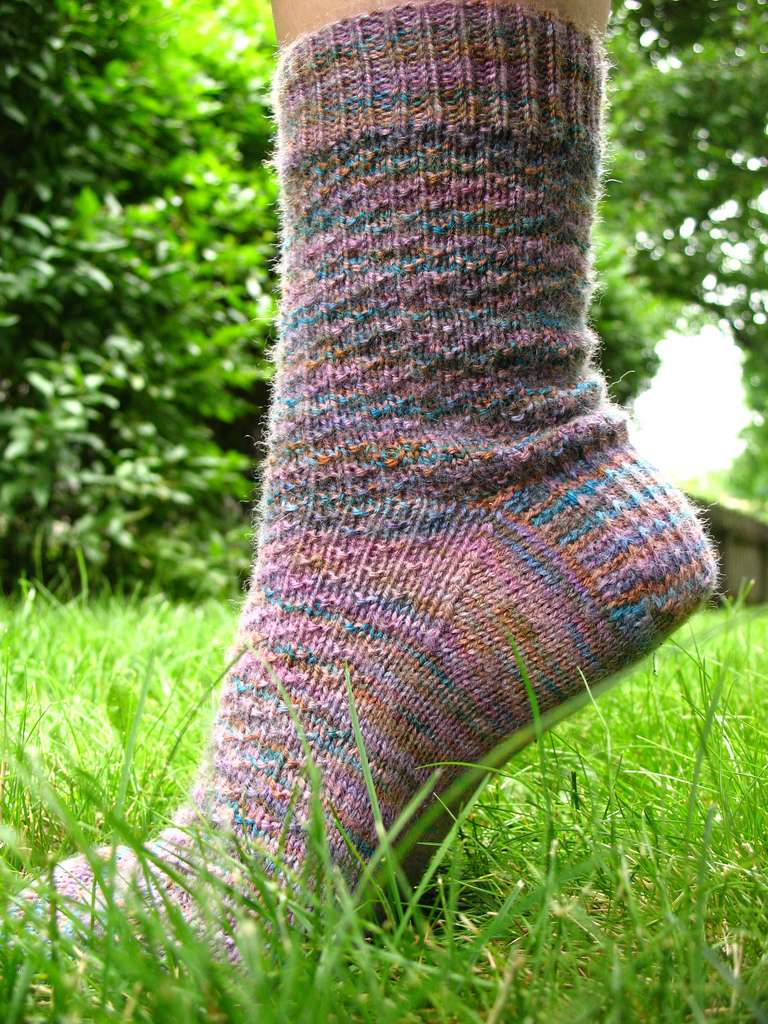
Hermione’s Everyday Socks via Ravelry.com (pattern link below)
Get this free knit sock pattern and yarn recommendations below:
Try Drops Fabel yarn, Malabrigo Sock Yarn, or Paton’s Kroy Socks FX for this knitting project.
So many knitting patterns pair up knitting decreases (and increases). Some of the most common uses and reasons to combine right slanting and left slanting decreases in your knitting include:
- Decreasing the crown of a hat.
- Toe shaping and heel turns on knitted socks.
- For waist shaping of tops, sweaters and cardigans, etc.
- Shaping necklines on top-down sweaters and knit tops, etc.
- Implementing lace stitch patterns in your knit project.
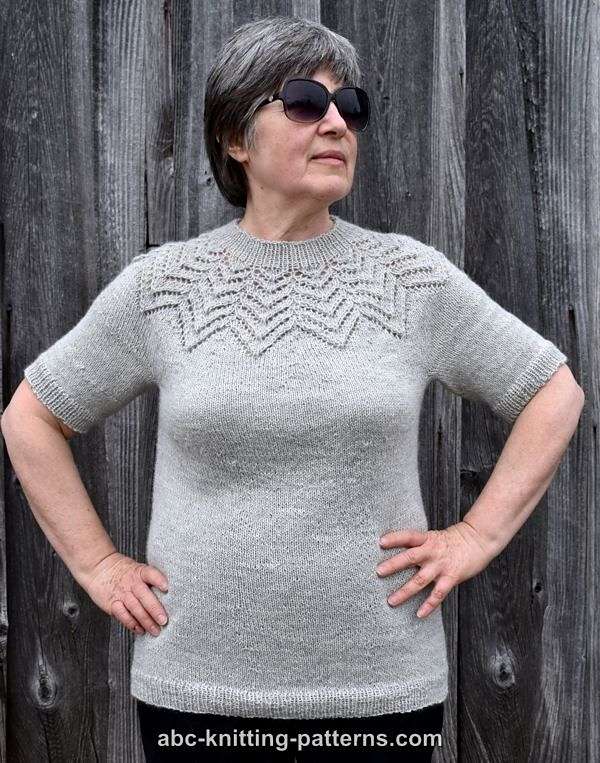
Get this free sweater pattern and yarn here:
Use Drops Lima yarn or try Berroco Ultra Alpaca yarn for this knitting project.
When you pair the SSK and K2TOG, the order of the knitting decreases affects how the finished knit looks. Let me elaborate.
Pairing the K2TOG and the SSK
Pairing the SSK and the K2TOG is intentional. These knitting decreases closely resemble each other stylistically, which is why you find them paired together in knitting patterns.
Here are some examples of the K2TOG and SSK knitting decreases paired together.
The Aedeline Shawl, shown below, knits up on the bias, and features stripes, twisted stiches, and lace patterns. It uses both K2TOGs and SSKs along with other knitting decreases and knit increases. The combination creates the biased angle and balances the entire pattern.

Get the pattern and yarn kit below:
Wayback Yarns Aedeline Shawl Yarn Kit
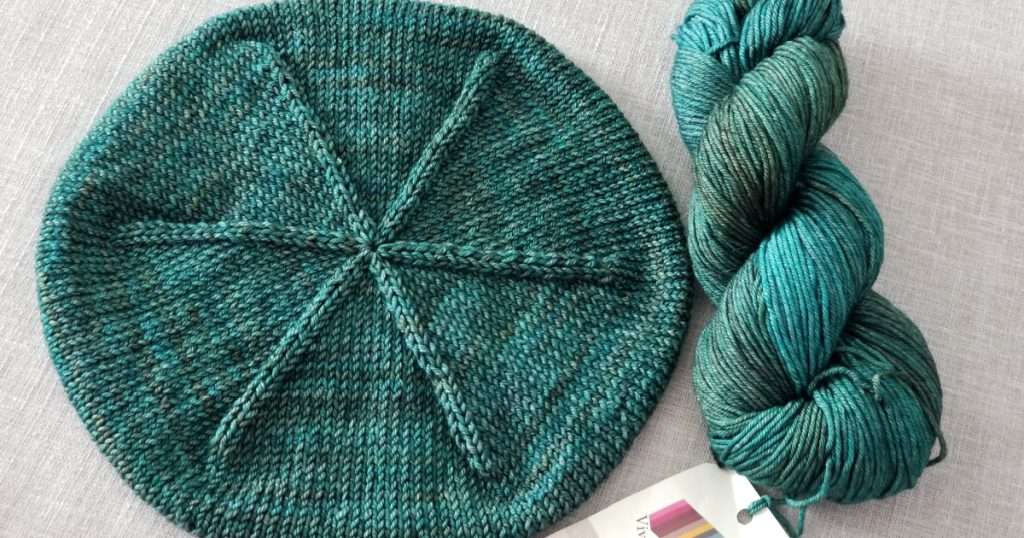
The Andalusian Risa Hat, shown below, is another example which pairs the K2TOG and the SSK together. These two knitting decreases are what create the tapered hat shape. Get the free hat pattern here.

Want to knit this hat? Try these yarns:
It’s easy to pair them together, but it’s more important to have them mirror each other. Let me explain what I mean.
Mirrored Decreases
Have you heard of mirrored decreases? If you haven’t or don’t know what this means, here’s what you need to know.
To mirror knitting decreases, or knitting increases for that matter, you must meet very specific requirements. The knitting decreases must:
- Be the same type of decrease at both sides or edges.
- Reduce the stitch count by the same number of stitches (single stitch decrease, double decrease, etc..).
- Occur before or after the same number of stitches at each side/edge.
- Be the same size on the left and right side of the knit fabric.
- Slant in opposite directions from each other, i.e., right slanting and left slanting.
In short, you must decrease the same number of stitches, balance them on the left and right side, make them look the same, are the same size, and lean towards or away from each other.
Here’s what balanced decreases in knitting look like. As shown in the swatch below, the paired decreases meet the requirement of mirrored decreases.
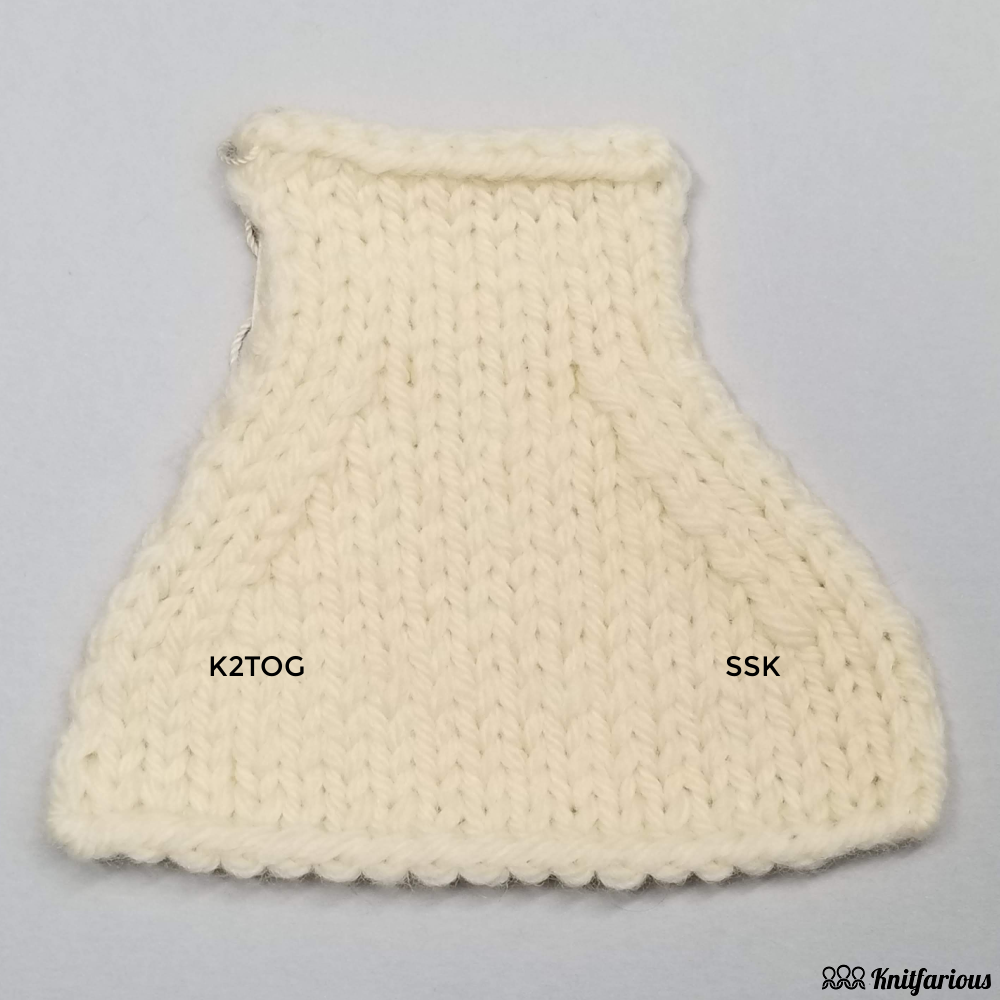
When pairing the K2TOG and the SSK together, these mirrored decreases perform the same function as the other and create symmetry in your knit fabric.
Some examples of this symmetrical shaping include:
- The armholes on sleeves
- Sock insteps
Is mirroring decreases important? Absolutely! Any irregularly placed knitting decrease will inevitably draw your attention to it. You want your finished knits to appear as flawless as possible.
Now, the next thing to consider with the SSK and the K2TOG is how you order them in your knitting. The knitting decrease order, i.e. SSK vs K2TOG or the reverse, are what determine if they’re blended decreases or full-fashioned decreases.
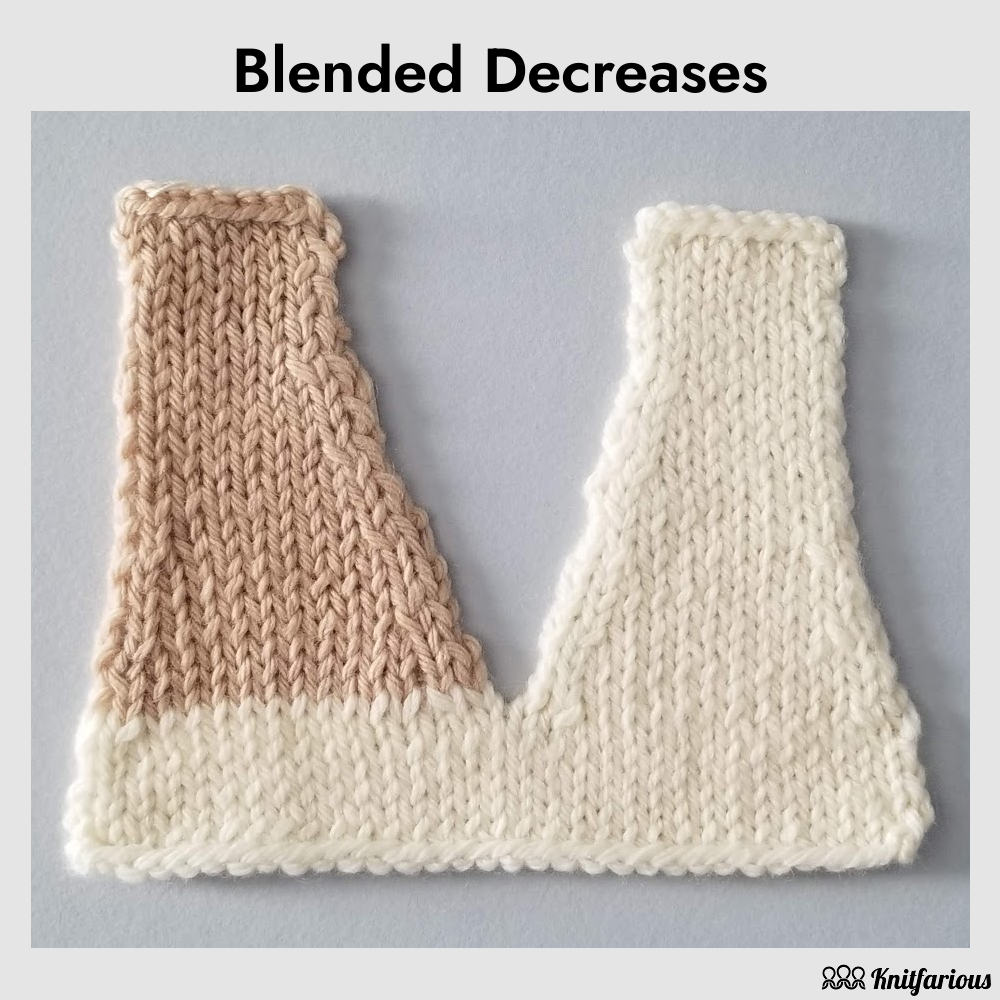
Blended Decreases
Just as the name sounds, blended decreases blend into the surrounding knit fabric. Here each decrease leans with the angle of your knitted piece, which makes them less visible.
If you look at this image below, you’ll find a knit swatch that resembles the top of a vest or sweater. This swatch is an example of blended decreases where the left leaning SSK decrease (\) is on the right edge and the right leaning K2TOG (/) is on the left edge, repeated in the natural and beige yarn.
Full-Fashioned Decreases
Full-fashioned decreases are the opposite of the blended decreases. They lean against the angle of your knitting and are highly visible. In many cases, you can use full-fashioned decreases as decorative elements in your knitting.
The knitted swatch in the image below shows full-fashioned decreases where the right leaning K2TOG (/) occurs first followed by the left leaning SSK (\).
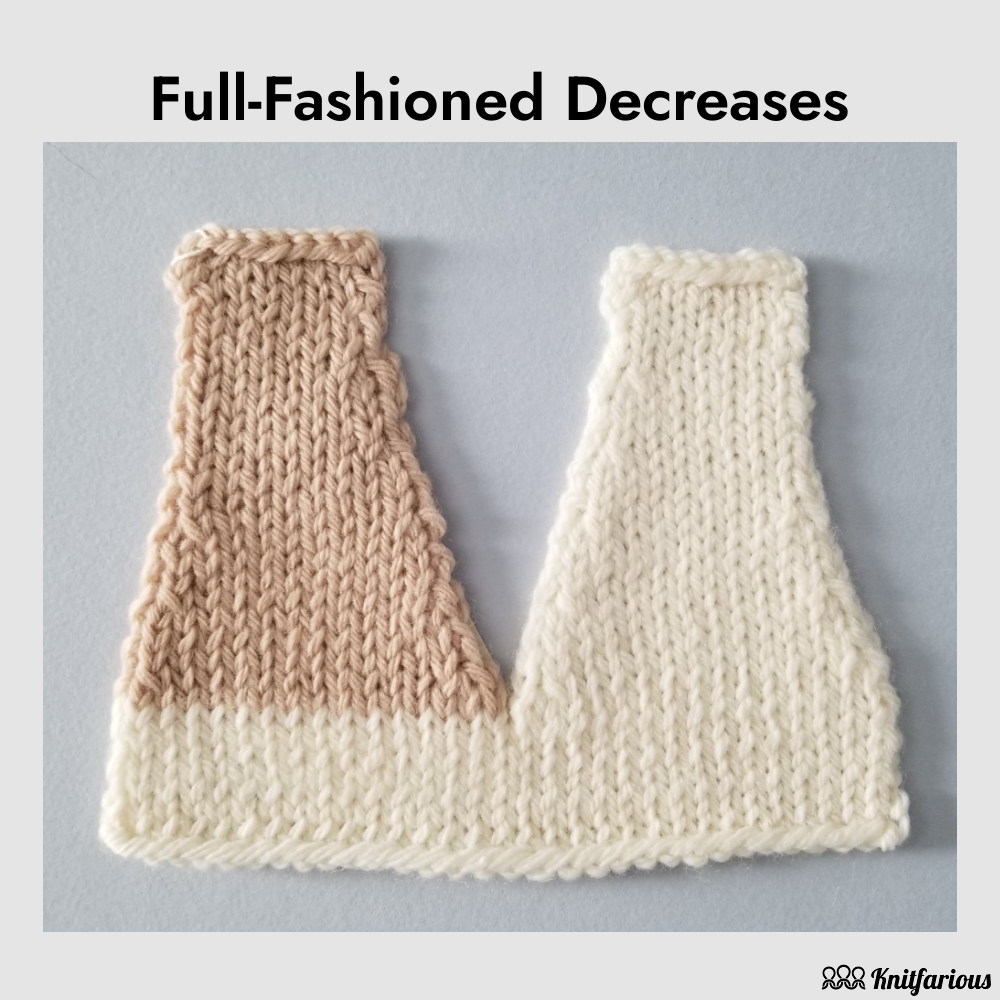
The previous two swatches were part of the TKGA Basics, Basics, Basics course I took with Arenda Holladay. They gave me a chance to see how the SSK vs K2TOG looks and how K2TOG vs SSK looks. Which do you prefer? Full-Fashioned or Blended decreases?
Finally, here’s an showing the SSK and the K2tog side by side with handy tips on how to remember how these knitting decreases lean.
Now that you’ve learned more about the SSK vs K2TOG decrease methods, why not find a fun knitting pattern to put these lessons into practice? You’ll find an assortment of free patterns here and here.
Want to learn more knitting decreases? Check out this book:
I hope this blog post on the SSK vs K2TOG knitting decreases was helpful. to you. Let me know in the comments below.


fabulous explanation
Thank you! I’m glad you found it useful!